
The Neocolonial Grab of Venezuela
Douglas de Castro
The (Still) Open Veins of Latin America
In the early hours of January 3rd, 2026, the citizens of Caracas were awakened not by the sunrise of a sovereign nation but by the thunder of a neo-imperial venture. U.S. forces initiated Operation Absolute Resolve, a coordinated military assault targeting the command-and-control infrastructure of the Venezuelan state. The operation, described by U.S. President Donald Trump as "brilliant" and "extraordinary," was characterised by its disregard for both civilian life and international law.
Initial reports indicate that explosions rocked the densely populated parish of 23 de Enero, a historic bastion of the Bolivarian Revolution, as well as the Fuerte Tiuna military complex and La Carlota airbase. These strikes, executed by stealth aircraft and low-flying MH-47 Chinook helicopters, were performative acts of terror designed to shock the population into submission. The widespread power outages that followed plunged the capital into darkness, a metaphorical foreshadowing of the political void Washington intended to create in the name of the American transnational oil corporations.
The tactical objective was to capture President Nicolás Maduro and First Lady Cilia Flores. This extraterritorial abduction bypassed all established protocols of extradition and diplomatic immunity, not to mention the disregard for the U.S. Constitution, which requires authorisation from Congress (Article 1, Section 8). By flying the captured head of state to New York to face domestic U.S. charges, Washington effectively erased the border between the sovereign territory of Venezuela and the jurisdiction of a U.S. Federal District Court. This act treats the Venezuelan state not as a peer in the community of nations, but as a subordinate colony subject to the police powers of the metropole. By no means is this article an attempt to justify some of the well-documented wrongdoings of Maduro, which the people of Venezuela should resolve. The objective is to expose the breach of international law, the disregard for multilateral solutions, and the exercise of raw power in international relations.
The Narco-Terrorism Pretext: Lawfare as War by Other Means
The justification provided by the Trump administration — and echoed by U.S. Attorney General Pamela Bondi— rests entirely on the unsealed indictments[A10] charging Maduro and Flores with narco-terrorism conspiracy (2020 and 2026). This narrative requires rigorous deconstruction.
From a Third World Approaches to International Law (TWAIL) perspective, the designation “narco-terrorist” is a potent tool of hegemonic discourse. It conflates two distinct threats — drug trafficking (criminal) and terrorism (political) — to create a state of exception in which the laws of war and the protections of sovereignty are suspended or relativised in the name of security. By labelling the Venezuelan government a criminal enterprise (the Cartel de los Soles), the U.S. strips it of its political legitimacy, thereby framing the invasion not as a war of aggression (illegal under the UN Charter) but as a police action.
This strategy relies on a circular and narrative logic that elevates the issue from low politics to high politics level (securitisation). First, the criminalisation act. The U.S. Department of Justice (DOJ) issues indictments against foreign leaders based on intelligence often provided by defectors or incentivised witnesses. Second, the delegitimisation in which these indictments are used to argue that the target is not a president but a criminal, thus negating the Head of State immunity. Third, the act of intervention which military force is deployed under the guise of law enforcement, bypassing Congressional war declarations and UN Security Council authorisation.
This narrative is blatantly hypocritical. While the U.S. frames itself as the global policeman combating narcotics, it simultaneously pardons convicted drug traffickers when politically expedient and ignores the demand-side crisis within its borders that fuels the global drug trade. The so-called War on Drugs in this context is exposed as a neocolonial mechanism for managing populations and resources in the Global South, rather than a genuine public concern or security initiative.
The Panama Precedent
Operation Absolute Resolve is haunted by the ghost of Manuel Noriega. The parallels between the 1989 invasion of Panama (Operation Just Cause) and the 2026 invasion of Venezuela are not coincidental; they are doctrinal, as in both instances, a Latin American leader was demonised as a drug trafficker, indicted by U.S. courts, and forcibly removed by U.S. military power.
However, there is an abyssal divergence in the material conditions of these two interventions. Panama in 1989 was a client state whose leader had gone rogue, but the Canal remained the primary strategic asset. Venezuela in 2026 is a founding member of OPEC with the world's largest proven oil reserves and a strategic partnership with the People's Republic of China. The Panama template is being applied to a scenario of vastly higher geopolitical complexity.
The U.S. reliance on the 1989 legal memorandum by William Barr — which asserted that the president could disregard the UN Charter to abduct foreign nationals — demonstrates the backwardness of the U.S. legal thought. While the world has moved toward a multipolar understanding of international law, the U.S. Executive Branch remains entrenched in a Cold War mindset of extraterritorial omnipotence.
Blood for Oil: The Primitive Accumulation of the Orinoco
While the invasion's superstructure rests on legalistic rhetoric, its economic foundation remains undeniable: the disaccumulation of capital in the U.S. economy requires new sources. President Trump’s admission that the U.S. would "tap Venezuela's vast oil reserves to sell 'large amounts' to other countries" and that U.S. oil companies would "start making money for the country" strips away any pretence of combating drugs or helping the Venezuelan people to get rid of a dictator. The correct name of this act is plundering.
This is plain and simple imperialism, the highest stage of capitalism, driven by the need to export capital and control raw materials. The U.S. economy, facing inflationary pressures and the stagnation of its shale boom, requires cheap, heavy crude to maintain the profitability of its Gulf Coast refineries. Venezuela’s heavy crude is the perfect feedstock (the largest, cheapest, and closest source). The blockade and subsequent invasion are mechanisms to forcibly reintegrate Venezuela’s resources into the U.S. cycle of accumulation, bypassing the sovereign rent-seeking of the Venezuelan state.
The so-called crisis in Venezuela was manufactured through sanctions that strangled the economy, creating the conditions for the intervention that is, in reality, a hostile takeover that started a long time ago.
The China Factor
Crucial to understanding the timing of the invasion is the deepening economic integration between Caracas and Beijing in late 2025. In August 2025, the private Chinese firm China Concord Resources Corp (CCRC)defied U.S. sanctions to sign a $1 billion investment deal, deploying a floating oil rig to Lake Maracaibo. This project aimed to raise production to 60,000 barrels per day by 2026, signalling that U.S. sanctions were losing their efficacy as a blockade tool.
The CCRC deal opened a gap in the U.S. economic siege. It demonstrated that private capital from the Global South was willing to bypass the U.S. financial system (using cryptocurrency and independent logistics) to engage with Venezuela. For Washington, this was an existential threat. If Venezuela could recover economically with Chinese help, the narrative of socialist failure would collapse, and the U.S. would lose leverage.
The invasion, therefore, was also a preemptive strike to halt the consolidation of the China-Venezuela energy axis. It serves as a kinetic enforcement of secondary sanctions—where economic coercion failed, military force was applied.
In addition, beyond the oil, the invasion targets the financial architecture of the Global South. Venezuela’s pivot toward selling oil in currencies other than the U.S. dollar (such as the Yuan or Petro) challenges the petrodollar recycling system that underpins U.S. financial supremacy. The secondary tariffs threatened by Trump in April 2025 against nations buying Venezuelan oil were an attempt to defend the dollar's monopoly. The failure of these tariffs to deter China necessitated the shift to direct military intervention.
From a Marxist perspective, this is a war to preserve the super-profits derived from the dollar's status as the global reserve currency. Venezuela’s potential admittance into BRICS in 2026, blocked only by Brazilian hesitation but supported by Russia and China, would have cemented its role in the de-dollarisation movement. The U.S. struck before this integration could become irreversible.
Normative and Performative Devices to Plunder
International law is explicit: the abduction of a foreign national from their sovereign territory is a violation of territorial integrity, one of the most basic principles of international law (known as jus cogens). The abduction of a Head of State is an act of war. The UN Charter (Article 2(4)) prohibits the threat or use of force against the territorial integrity or political independence of any state.
By relying on the 1989 Barr Memo, the U.S. behaves as a rogue state, operating outside the Vienna Convention and customary international law, creating a dangerous precedent: if the U.S. can kidnap the president of Venezuela, what prevents other powers from abducting U.S. leaders for war crimes (or Benjamin Netanyahu)? The U.S. relies on raw power to immunise itself from the very laws it imposes on others, a classic definition of imperial exceptionalism.
Also, the War on Drugs is the modern successor to the colonial Punitive Expeditions. It allows the metropole to project military force on the periphery under a moralistic banner — the mission civilizatrice to save the savages from themselves. From a TWAIL perspective, colonial powers shaped drug control treaties to regulate trade and labour in the Global South (see the example of Great Britain in the Opium Wars with China).
The designation of the Cartel de los Soles as a narco-terrorist organisation allows the U.S. to treat the Venezuelan state not as a political entity but as a criminal conspiracy. This criminalisation of the state is a deliberate tactic to bypass the legal protections afforded to sovereigns. It transforms the political enemy (the socialist) into the criminal enemy (the trafficker), making their elimination not just permissible, but a moral imperative.
The Geopolitical Shockwaves
The U.S. calculation that China would remain passive is a strategic error. Beijing’s response has been swift and condemnatory, labelling the invasion a "hegemonic act" and a "serious violation of international law." Although China is unlikely to engage militarily in the Caribbean, the invasion breaches Chinese interests, particularly the physical safety of its investments, and the stringent defence of sovereignty and multilateral/peaceful solutions.
The invasion endangers the Zone of Peace in Latin America, a concept Beijing has supported to protect its Belt and Road Initiative (BRI) investments. We can expect China to respond asymmetrically on some fronts. In the diplomatic front, by mobilising the G77 and the UN General Assembly to condemn the U.S. Also, on the economic front, by dumping U.S. treasuries or accelerating the de-dollarisation of trade with Brazil and Saudi Arabia. Finally, on the military front by putting in high alert status the PLA Southern Theatre Command and conducting drills in the South Sea suggests that Beijing views U.S. aggression as global, necessitating a global display of readiness.
The invasion has shattered the illusion of hemispheric unity. While right-wing factions in the region may celebrate, the progressive governments view this as a direct threat. Colombian President Gustavo Petro’s call for a UN Security Council meeting and his warning of a refugee crisis highlight the regional destabilisation. Brazil’s condemnation, calling the closure of airspace an act of war, signals that the regional hegemon will not accept a return to 20th-century gunboat diplomacy.
This event effectively kills the Organisation of American States (OAS) as a credible forum, pushing Latin America further toward CELAC (Community of Latin American and Caribbean States) and BRICS. The U.S. has won a tactical victory in Caracas but suffered a strategic defeat in the hearts and minds of the Global South.
The Limits of Imperial Power – Vietnam in the Andes?
The invasion of Venezuela is not a sign of U.S. strength; it is a symptom of decline. A confident hegemon leads through consensus, trade, and soft power. A declining empire lashes out with military force to seize assets it can no longer acquire through the market. The sheer scale of the operation — bombing the capital Caracas and the states of Miranda, Aragua and La Guaira, deploying naval blockades, and kidnapping a sitting president — reveals the extent of the resources required to discipline a single developing nation.
This overextension exacerbates the internal contradictions of the U.S. empire. The domestic opposition within the U.S. (led by figures calling the war unconstitutional and illegal) highlights the fracture in the imperial core. The imperial boomerang effect will see the authoritarian methods used abroad — surveillance, militarised policing, disregard for law — reimported to suppress dissent at home.
Conclusion
The capture of Nicolás Maduro is a Pyrrhic victory. Washington has secured the man, but it has lost the region. Operation Absolute Resolve strips away the democratic veneer of U.S. foreign policy, revealing the naked predatory logic of late-stage imperialism, a zero-sum game. It makes the world unsafe.
The reaction of the international community has been overwhelming in condemning the attack and kidnapping of Maduro. Despite the internal challenges of Venezuela, resorting to this strategy violates the United Nations system and Charter, a system the U.S. helped to create and sustain for decades, showing the hypocrisy of using and discarding it whenever it suits its interests. The Security Council will convene on January 5th to debate the issue, which will show the isolation of the U.S. vis-à-vis the respect of international law.
For the Global South, the lesson is clear: International law offers no protection against an empire in crisis. Security lies not in compliance with the Rules-Based Order, but in the construction of robust multipolar alliances, autonomous economic systems, and the capacity for asymmetric defence.
The invasion of Venezuela is not the end of the Bolivarian Revolution; it is the beginning of its most critical phase. As the smoke clears over the 23 de Enero, the dialectic of history turns once more—not toward the End of History promised by neoliberalism, but toward a sharpened conflict between the forces of sovereign emancipation and the forces of imperial subjugation. The U.S. has swallowed the bait of immediate resource seizure, only to find itself ensnared in the trap of a protracted, delegitimising colonial war.
Disclaimer: The editors do not necessarily endorse the viewpoints expressed by the author and cannot be held personally responsible for the content.
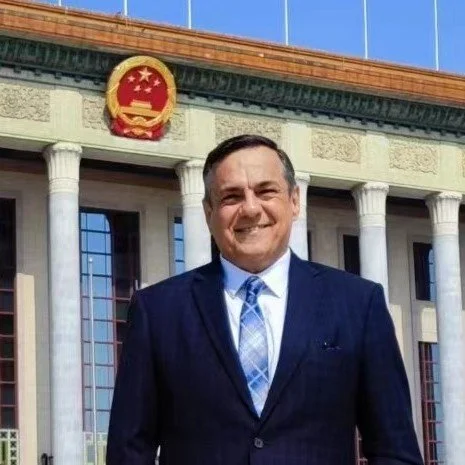
Author:
Douglas de Castro is a Professor of International Law at the School of Law, Lanzhou University (Lanzhou, China). Visiting Scholar at RUDN University (Moscow, Russia). Visiting Scholar at Christ University (Pune, India). Researcher at the Center for American Studies, Nanjing Agricultural University (Nanjing, China). Visiting Scholar at the Foundation for Law and International Affairs (Washington, D.C., United States). Environment Policy Expert for Andean Road Countries in Science and Technology (Beijing, China). Licensed Professor of International Law and Politics and Research Director at the Center for International Law and Politics, Washington & Lincoln University (Orlando, United States). Judge in the China Round of the Jessup Moot Court Competition. Ph.D. in Political Science from the University of São Paulo (Brazil). Master's in Law from the University of São Paulo (Brazil). LL.M. in International Law from J. Reuben Clark Law School, Brigham Young University (Provo, United States). LL.B. in Law from Osasco Law School (Brazil).
